Pickleball Injury Prevention
Pickleball is a great way to stay active, enjoy friendly competition, and connect with others. But even though it is often considered a low-impact sport, pickleball requires quick reactions, sudden stops, lateral movements, reaching, and changes in direction. Without adequate strength, balance, mobility, and preparation, these movements can increase the risk of injury.
Second Peak Training Corporation helps adults 50+ build the strength, balance, mobility, and physical confidence needed to stay active and enjoy the activities they love. Our in-home personal training in Chicago can help you prepare your body for the demands of pickleball and other recreational activities.
Pickleball Injury Statistics
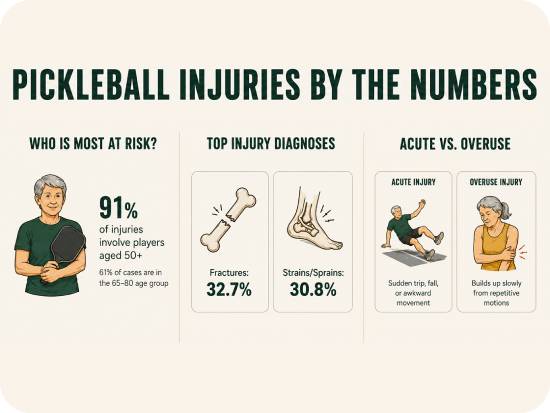
Research published in peer-reviewed medical journals highlights why injury prevention deserves attention.
- 66,350 estimated injuries: A 2025 study examining U.S. emergency department data estimated 66,350 pickleball-related injuries between 2013 and 2022
- 65.5% involved falls: Falls, trips, slips, and dives accounted for approximately two-thirds of injuries in that study
- 32.7% were fractures: Fractures represented the largest diagnostic category, followed by strains and sprains at 30.8%
- Injuries are increasing: A separate study estimated that annual pickleball-related emergency department injuries rose from 1,313 in 2014 to 24,461 in 2023
These are estimates of injuries presenting to emergency departments, not the total number of injuries among all pickleball players. They also do not measure an individual player’s probability of getting hurt.
Common Pickleball Injuries and Risk Factors
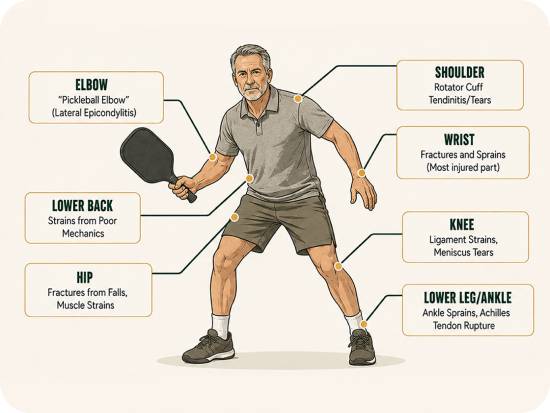
Pickleball places demands on the entire body. Common injuries include:
- Knee and ankle injuries: Rapid changes in direction, pivoting, and sudden stops can strain joints and surrounding tissues
- Shoulder and elbow pain: Repeated swinging, reaching, and overhead movements can aggravate muscles, tendons, and joints
- Wrist injuries and fractures: Falling and attempting to catch yourself with an outstretched hand can result in serious injury
- Muscle strains and sprains: Sudden acceleration, lunging, and movements beyond your current capacity can overload
muscles and ligaments - Falls and balance-related injuries: Reduced balance, lower-body strength, or the ability to react quickly can make
recovering from an unexpected movement more difficult
Age alone does not determine injury risk. Your current fitness, previous injuries, mobility, balance, playing intensity, and recovery all matter.
Four Ways to Help Prevent Pickleball Injuries
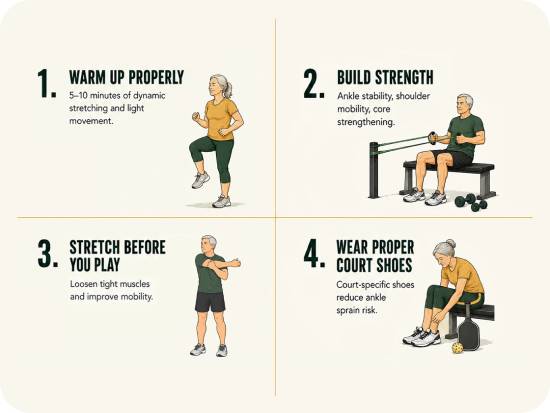
1. Build lower-body strength. Stronger legs and hips help support everyday movement, controlled changes in direction, and getting up from a seated position. Exercises should match your current ability and physical needs.
2. Improve balance and stability. Appropriate balance training can help you develop better control while standing, stepping, and changing direction. Exercises should be performed with suitable support when needed.
3. Maintain mobility. Comfortable ankle, hip, shoulder, and upper-back mobility can help you move more efficiently around the court.
4. Prepare before playing. Begin with a gradual warm-up, easy walking, and comfortable dynamic movements before progressing to faster activity. Increase playing time and intensity gradually rather than doing too much too soon. Respect pain and recovery. Allow time to recover between sessions. Do not push through sharp pain, unusual shortness of breath, dizziness, or chest discomfort. Stop exercising and seek appropriate medical care when symptoms warrant it.
No exercise program can eliminate every injury risk, but preparing your body can help improve physical readiness for the demands of the game.
Get Pickleball-Ready With Second Peak Training
You do not have to be a competitive athlete to benefit from sport-specific strength and conditioning. You need a program that respects your starting point, goals, and physical capabilities.
Second Peak Training Corporation provides in-home personal training for adults 50+ in Chicago, with an emphasis on strength, mobility, balance, and maintaining an active lifestyle.
Your training program can be tailored to your current fitness level and goals, including improving the physical capacities that support recreational activities such as pickleball. Exercises can be modified to accommodate appropriate limitations, and your program can progress as your abilities improve.
Contact Second Peak Training to discuss your personal training goals and learn how an individualized strength and mobility program may help you prepare for pickleball and an active life.
Personal training is not medical treatment or rehabilitation. Consult your healthcare professional before beginning a new exercise program if you have medical concerns, significant pain, or a recent injury.